A famous combat set is the WW2 BC-683 vehicular radio receiver which worked in the 27 – 38.9 mc Artillery Band. It is a Basic Component of the SCR-628 system fielded in 1941 introducing tactical VHF FM into the US Army in a big way. That WWII vehicular system and its variants replaced the earlier HF AM radios such as the SCR-245, SCR-506 and others. The BC-683 Receiver:
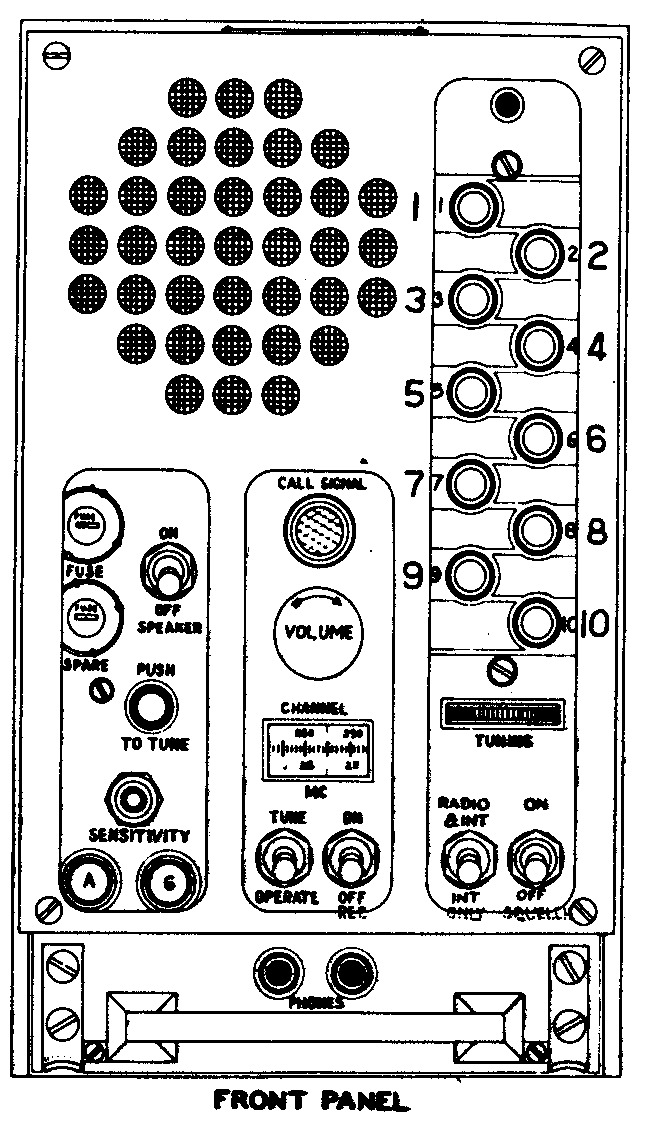
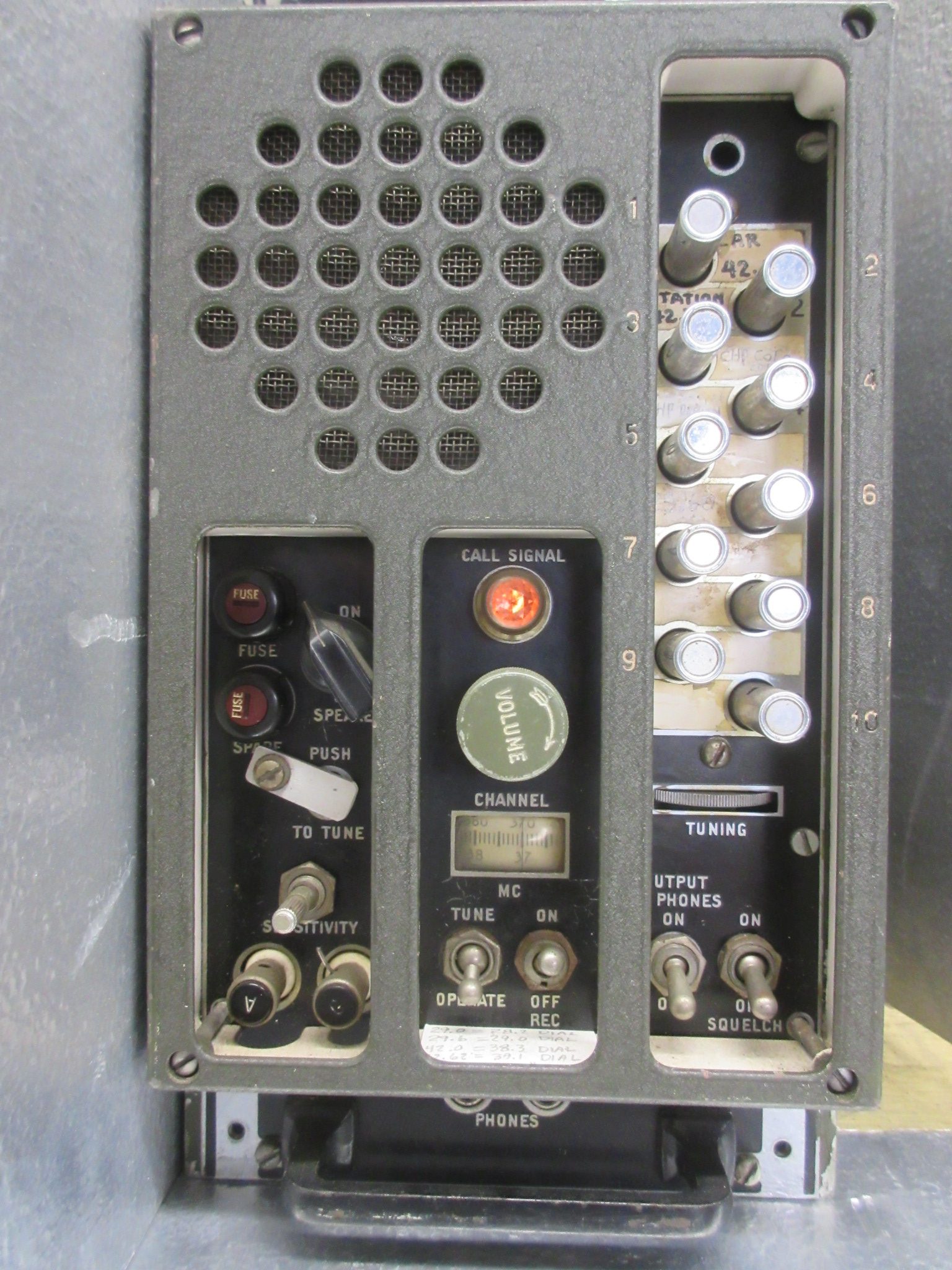
The SCR-628 set included one crystal-controlled BC-684 Transmitter plus one receiver as seen above. There were many system variants that used these basic components including a set with 2 receivers. The usual vehicle antenna used an AB-15 base and MS-117 and 118 mast sections. TM11-620 and others apply.
It is a very rugged, 10-tube receiver that includes variable as well as “push button” tuning for up to 10 pre-set channels. The stock receiver covers from 27 to 38.9 mc in the Low VHF band. It was fielded as an “Artillery” C&C set for anti aircraft, anti-tank and fire control units.
The SCR-628 was interoperable with the SCR-609/10 “Jeep Radio”, the BC-659 being its main component. The otherwise identical SCR-608 system covered the “Armor” band from 20 – 27.9 mc and is known by some as the “Tank Radio”.
The “Infantry” band was higher up, from 38 to 54 mc. Its SCR-300/BC-1000 FM “Walkie Talkie” radios covered from 40-48 mc but could not communicate with the SCR-628 sets. Effective Combined Arms communications was still a way off into the future.
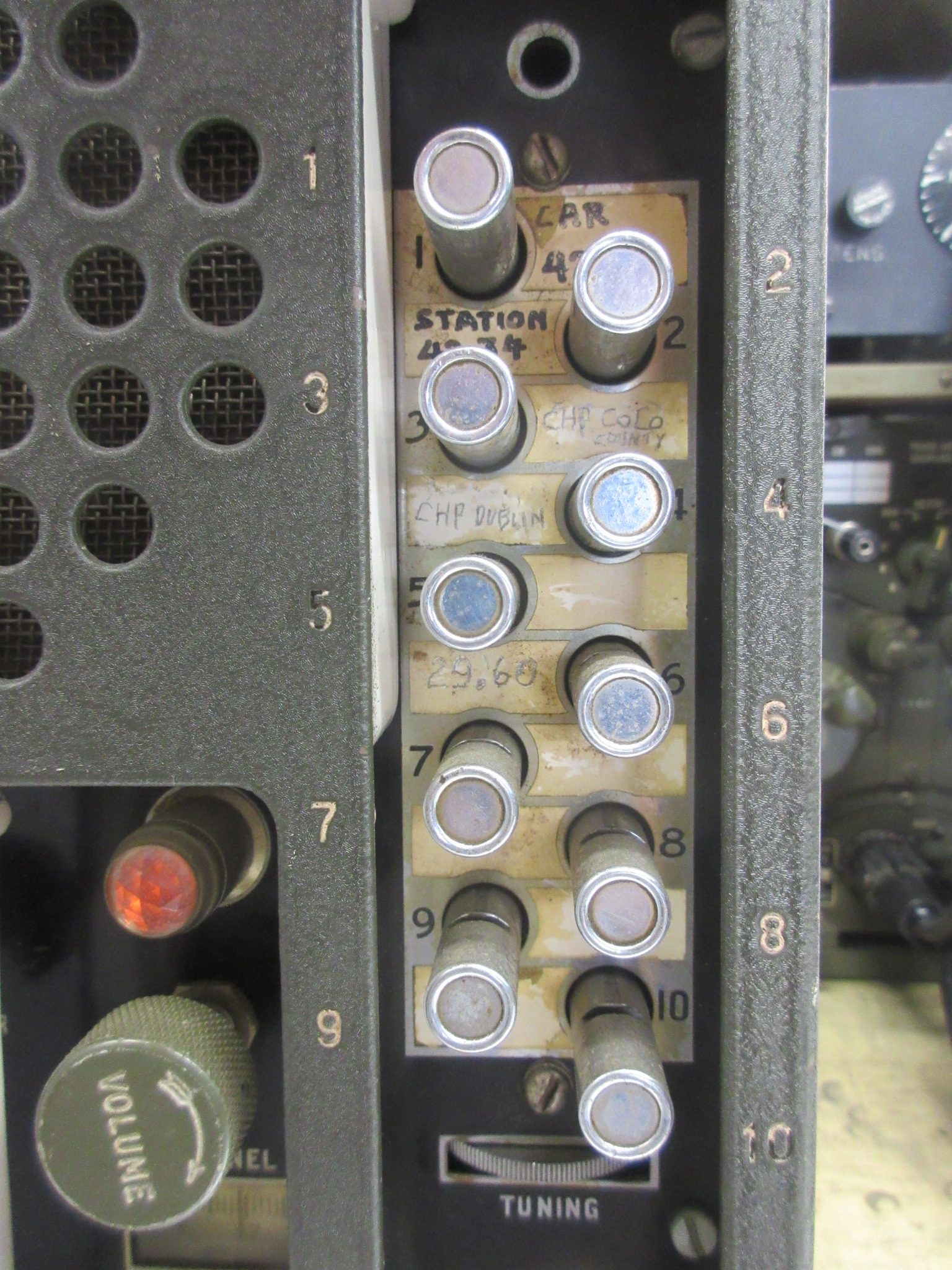
Those (Chromed!) push button tuning systems showed up in all the later civilian car radios for AM radio reception. Look familiar? You remember.
This series of tactical FM radios pioneered the mass use of crystal control for the transmitters. This was driven by the need for 120 discrete frequency “channels”. This while maintaining the required frequency stability in the harsh thermal and vibration environment inside a moving armored vehicle. Transmitter frequency control via the usual L-C tuned circuits would have required some extreme design and fabrication work. That was deemed to be excessive and ultimately insufficiently stable for mass production and combat.
The Artillery Band had 120 channels and each radio transmitter had a storage box for 120 transmitter crystals to be installed per the Comm Plan in effect. Below are some sample crystals from those sets:
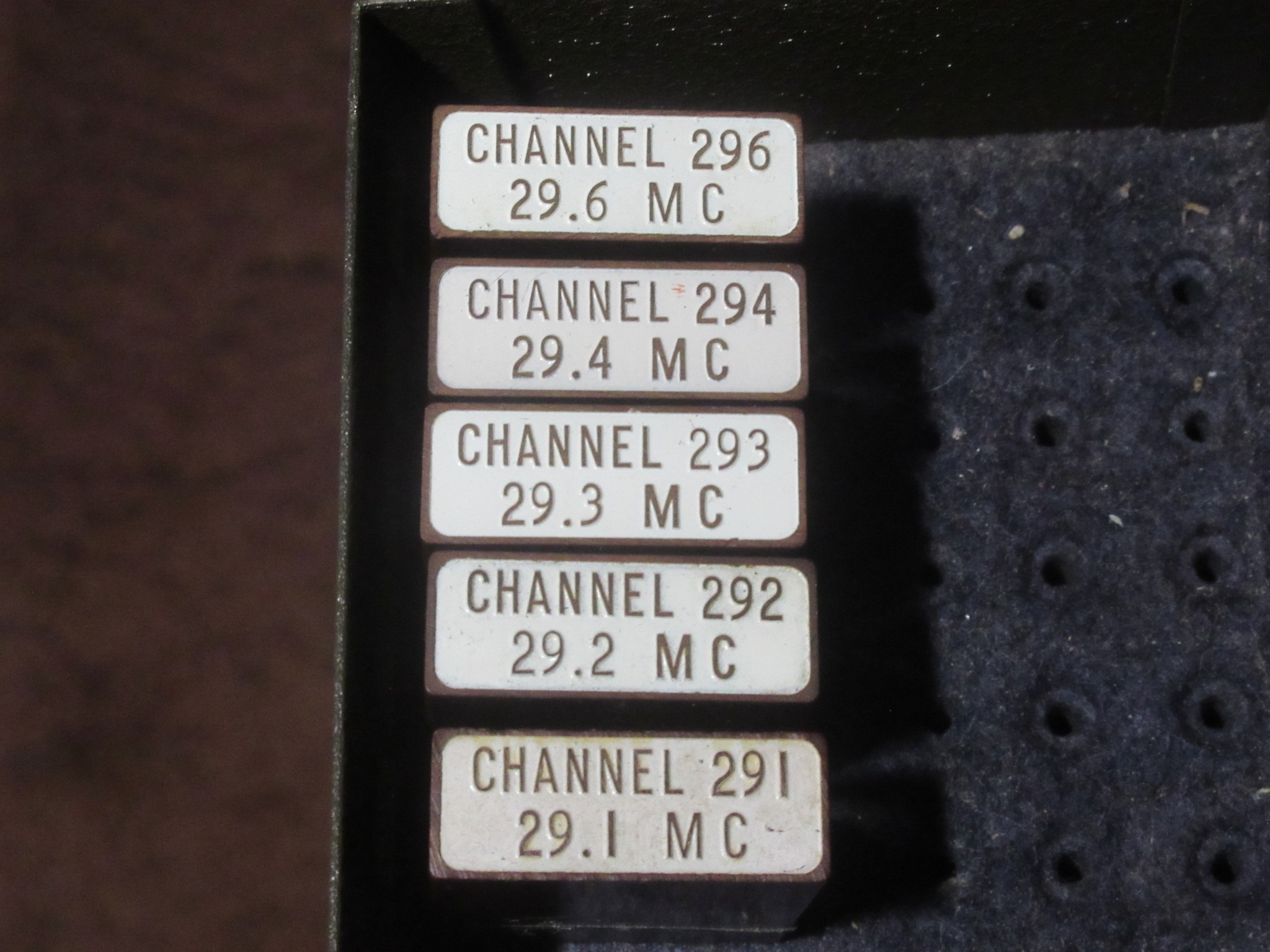
US industry produced millions of precision quartz crystals for the war effort. That is a major story in itself.
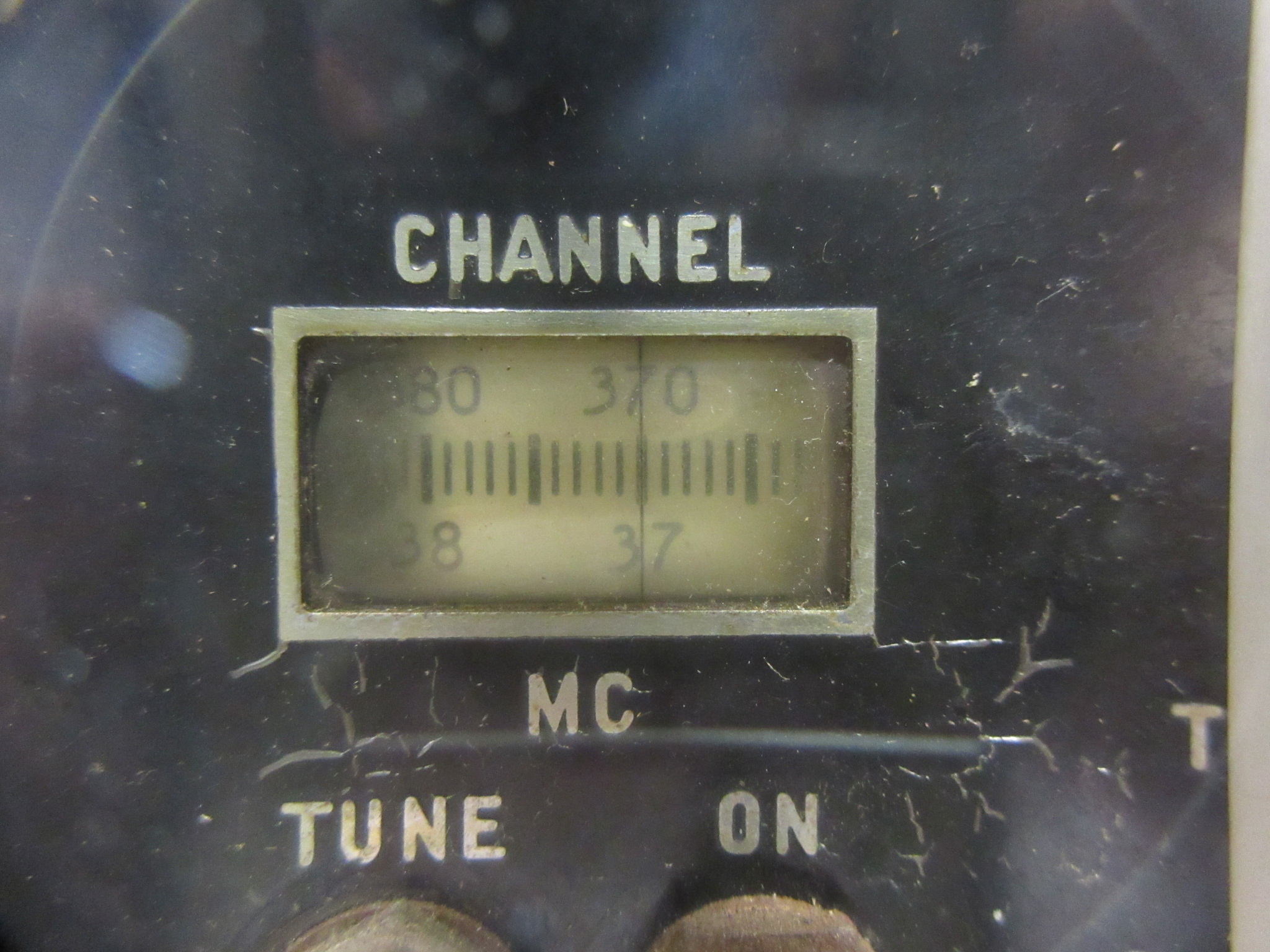
The channelization made it easy for the planners and operators by providing those 120 channels with 100 kc spacing. This was to allow for its wide band FM signal and associated receiver bandwidth. The channel number also indicated the frequency. Simple.
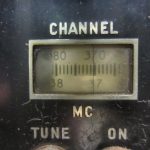
As seen in the below example, Channel 370 was on 37 mc. Channel 371 was on 37.1 mc etc. Each “line” on that receiver tuning dial represents an individual channel.
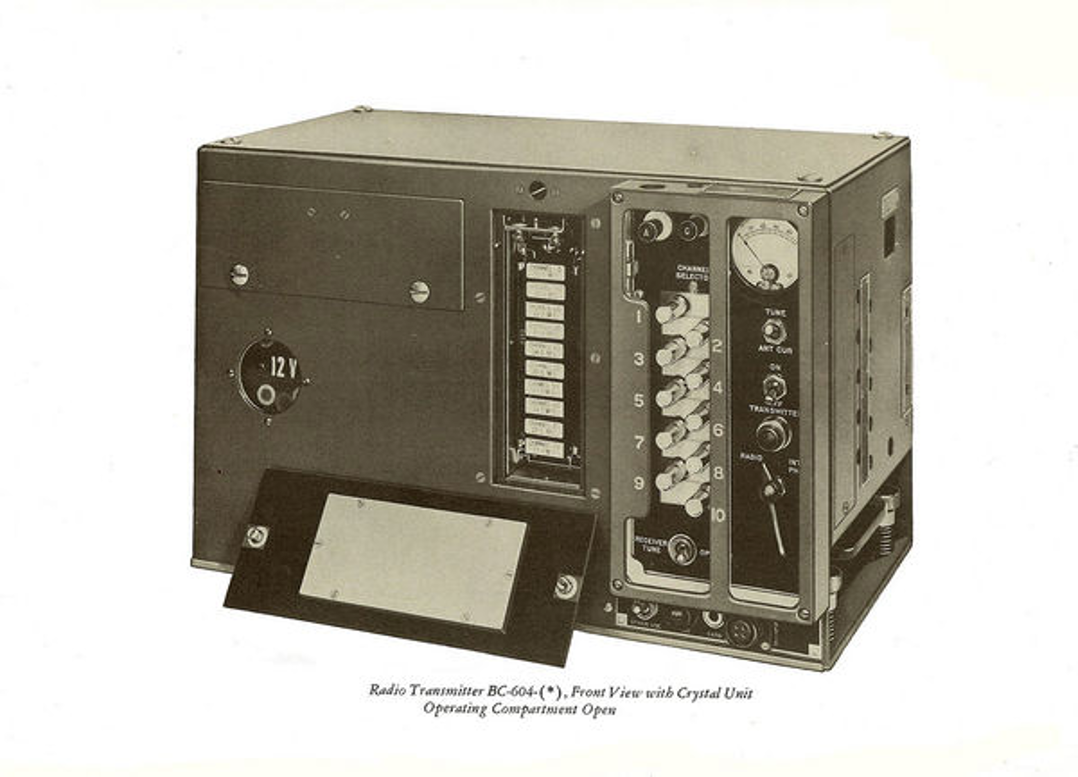
The 20 watt (documents vary) transmitters were crystal-controlled and also included push-button channel selection. Planning range between equipped vehicles was 10/15 miles (documents vary), moving/fixed.
The transmitters and receivers were individually powered by either 12 or 24 volt, plug-in, internal dynamotors. My receiver is powered by a plug-in 120 VAC power supply, probably a commercial after-market item from decades ago. Maybe from Fair Radio Sales?
I have had this receiver for decades and it still works great more than 80 years after it was built. Its 2 watt audio output stage delivers LOUD, crisp audio from the internal speaker, just what you’d need inside a moving armored vehicle. I frequently have it connected to the AS-1729 VHF whip antenna up on the roof; the receiver is quite sensitive. A 6 foot random wire antenna also works well.
I mainly use it to listen to the CA Highway Patrol radios that operate in the 42-43 mc VHF band plus other public safety systems. Modern commercial FM sets are “narrow band” these days but they still sound adequately loud and clear on my set which originally had an 80 kc IF bandwidth. In the past 40+ years since I obtained it I had probably removed the loading resistors from the 3 IF transformers to tighten up the IF bandwidth. I forget, but it sounds like it. It actually sounds great!
To receive that higher band segment I had adjusted the local oscillator L-41 to move the coverage “up” since there is little FM to hear between 27 and 38.9 mc around here these days. A simple adjustment; I had probably also adjusted the antenna circuit tuning. It now covers 29.0 – 43.0 mc, still to include 10 meters Ham FM. My set somehow has the front panel guard from a BC-603 receiver as swapped in the distant past so the panel I.D. nameplate is wrong, but stuff happens.
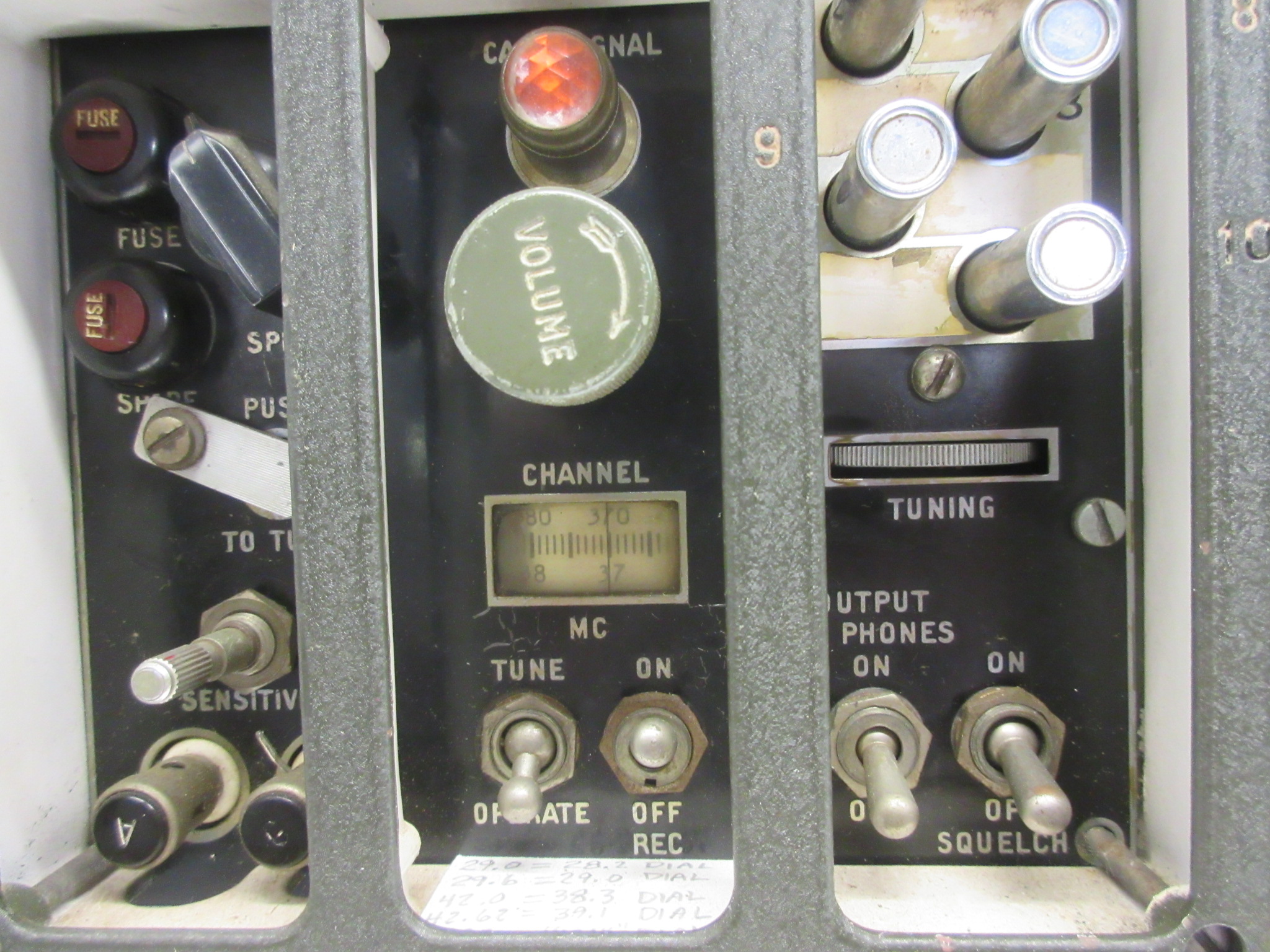
The receiver includes an effective Squelch function and a handy orange neon “Call Signal” light to alert the operator when a signal appears on the channel. That jeweled lamp lens is classic WWII. That system works great as seen below. A pair of headphone jacks are on the front panel for local operation but when installed in a system it also interconnects with the vehicle crew intercom. Nice.
A switch can turn the internal speaker Off when needed. There is a sensitivity control to adjust the RF gain while in the Squelch mode and a Tune/Operate function used to program the push buttons to the desired frequency. Front panel Antenna and Ground connection are provided for testing although the vehicle antenna connects via the rear panel connector.
The SCR-628 was also controllable remotely via the RM-29 Radio Wire Integration system if needed. That is a similar system as the GRA-6 for the VRC-10 equipment.
The SCR-628 family was a very versatile, modular system that also served throughout the Korean War. Good gear.
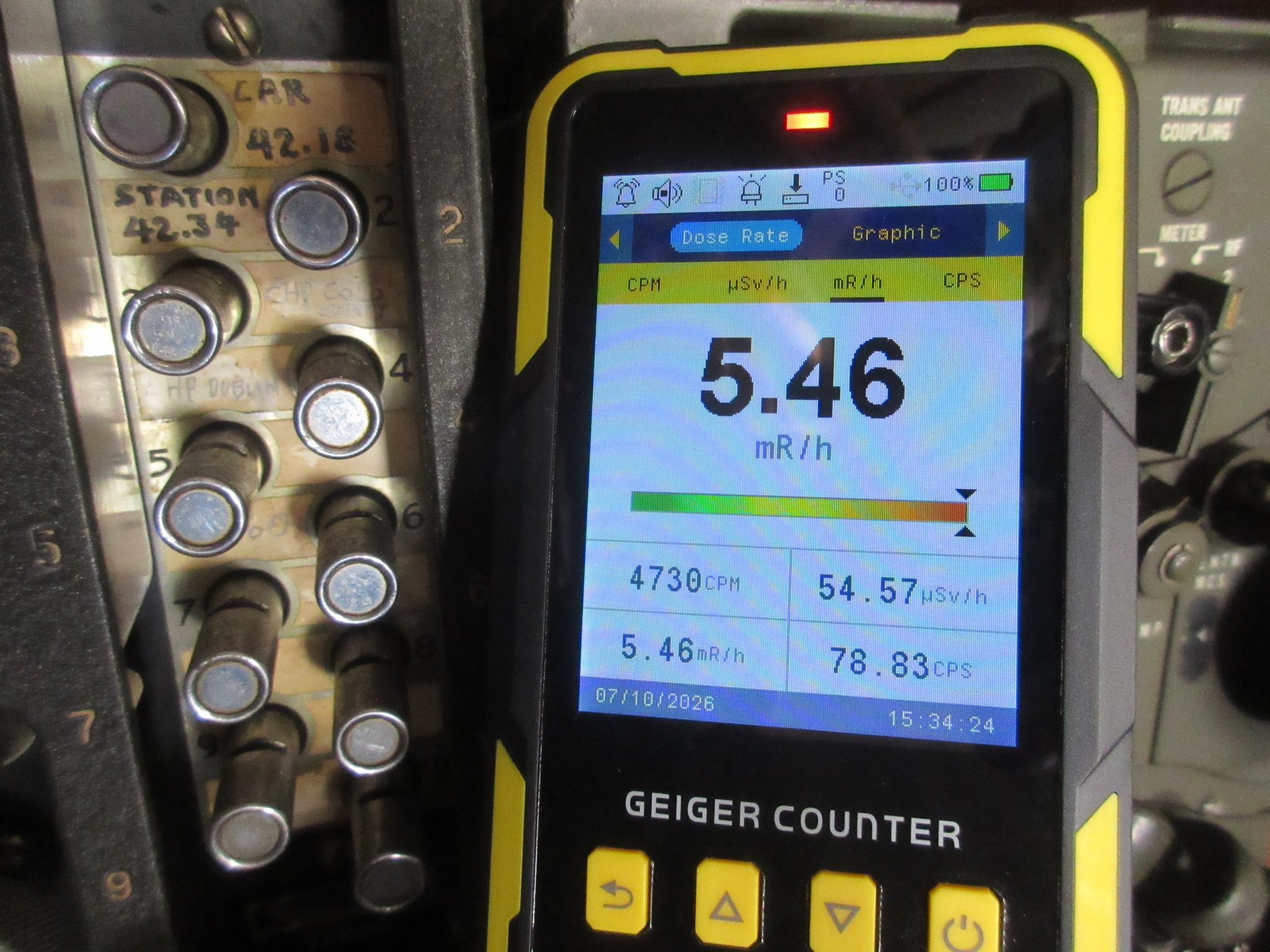
Heads Up: The front panel Channel Number indicators adjacent to the push buttons contain radioactive paint. Most likely Radium 226 which was commonly used in WWII for labels such as this. It was used to excite the phosphor material mixed with the Radium to generate a semi-permanent glow in the dark.
Due to the long term radiation bombardment of the phosphor material and subsequent damage, the glow is extremely dim after 80+ years. However the Radium is still there. Radium 226 has a half-life of 1620 years.
My receiver emits around 5.46 mR/hr when the detector is touching the panel. This is mostly Gamma radiation as shown on the GQ GMC-800 Geiger Counter. This device cannot detect the Alpha radiation primarily emitted by Radium 226 decay but it can detect the Gamma radiation also emitted. Talk about a “HOT” receiver!
It falls back to background levels (around 0.01 mR/hr) at 3.5 feet from the radio panel following the Inverse Square Law. (Increasing the distance by a factor of 2 reduces the rate by a factor of 4 etc.)
As with any device using Radium paint such as this DO NOT disturb the paint. Inhalation of scraped-off paint particles is very hazardous. I subsequently sealed these numerals with thick, clear “finger nail hardener” sealant to further immobilize the paint from being disturbed. As such it is safe to be around but keep your long-term distance as a precaution. Don’t set it up on the night stand next to your bed.
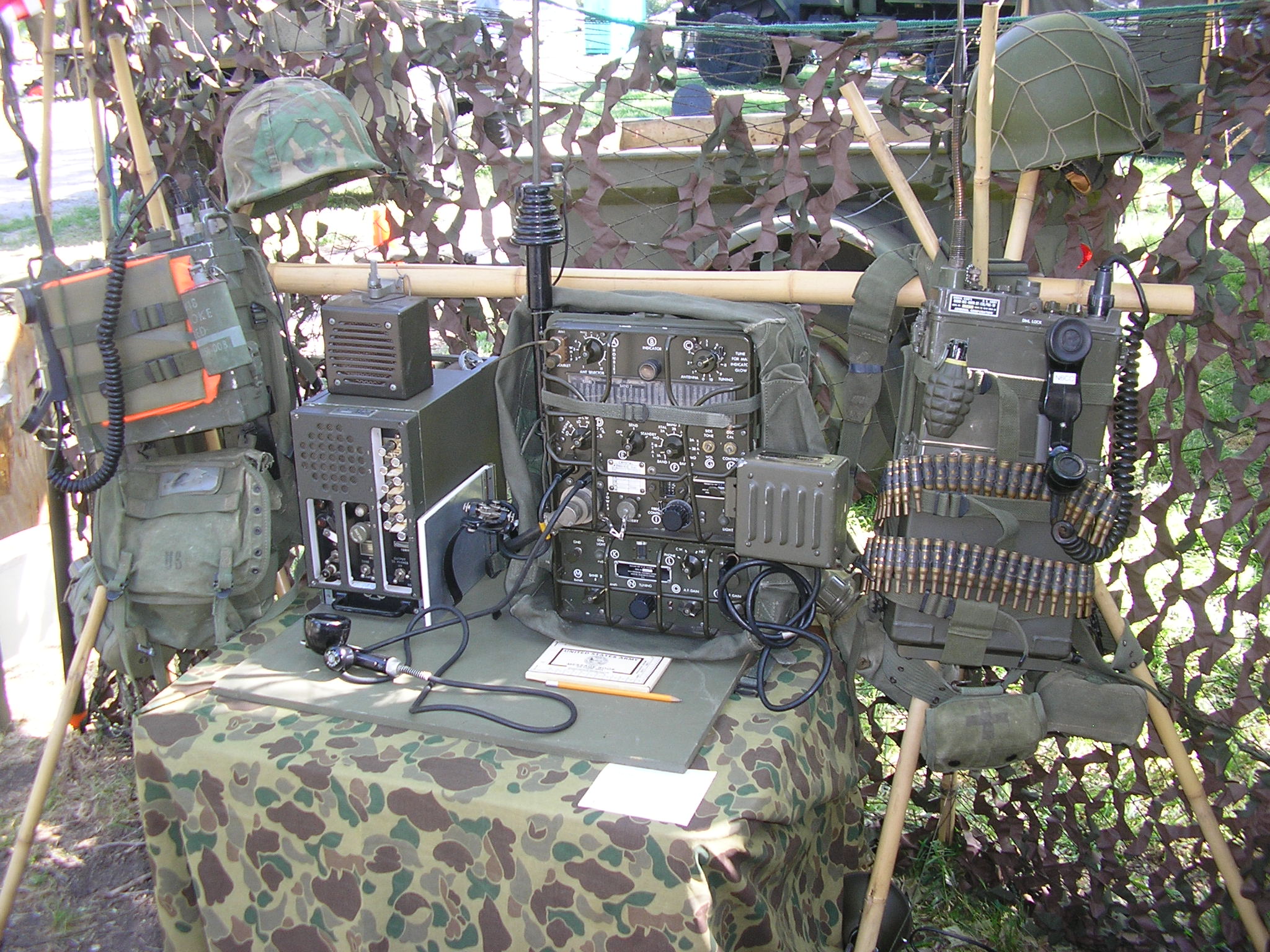
Operations: Below is a fun setup during the 2013 MVCC military vehicles rally at Camp Delta CA. The BC-683 monitoring the artillery net while the GRC-9 provided long range voice and CW capability to call in Naval Gunfire from the BB’s offshore. The PRC-10 and PRC-25 also contribute to the Time Machine vibe. Except for the PRC-25, a setup like this could have been lashed up during the Korean War by enterprising GI’s. Never say Never! All equipment here was operating and online for the visitors to enjoy.
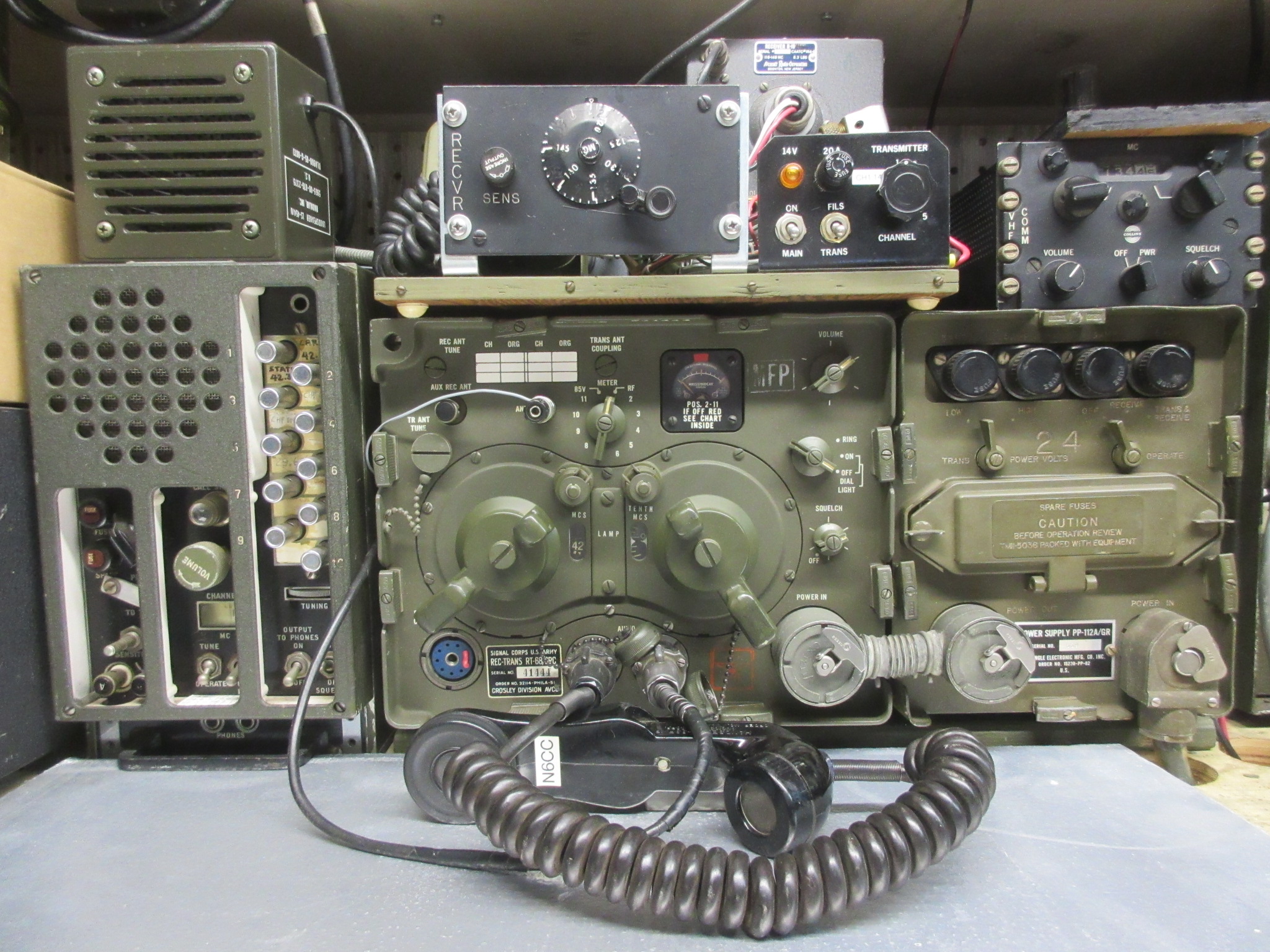
The SCR-628 was replaced in the 1950’s by the GRC-3/8 series, another very versatile, modular system. Below is the BC-683 alongside one of its replacement configurations: The VRC-10 which was a transceiver. There is no separate receiver in this setup although there continued to be a separate auxiliary receiver, the R-110/GRC with the newer series.
The VRC-10 “Infantry Band” set consists principally of the RT-68 receiver-transmitter powered by its 24 volt PP-112 power supply. It was interoperable with the PRC-10 manpack sets. An A.R.C. Type 12 and Collins 618F-1 providing air assets coordination down here in Radio Two:
For more details on the RT-68 setup take a look here: https://www.n6cc.com/vrc-10-rt-68-transceiver/